How Can a Low-Spec Device Keep Its “Active Tasks” Under Control?
Understanding how PMAOS and Xinlingtong use process management to preserve usability on feature phones
From User Experience Back to System Issues
When a feature phone carries calls, content, voice interaction, and AI access at the same time, the first problem exposed is usually not a lack of features, but too many tasks competing for limited resources: which task should run first, which can be interrupted, and which should be reclaimed after an error. Process management is the system capability that brings order to these “active tasks.” It does not increase CPU performance, but it does affect which task receives limited computing power at critical moments.
PMAOS is developed by PMAOS Inc. In its official Q&A, multithreading, CPU time-sharing, task priority, deadlock prevention, and real-time runtime are listed as key system capabilities. Shenzhen Weilai Qiusuo is authorized to handle sales, localization, commercialization, and operations in relevant markets; Xinlingtong is a feature-phone product and business solution built on PMAOS mobile. In this context, process management is both a foundational system capability and a basic order that Xinlingtong must establish before placing multiple services into one device.
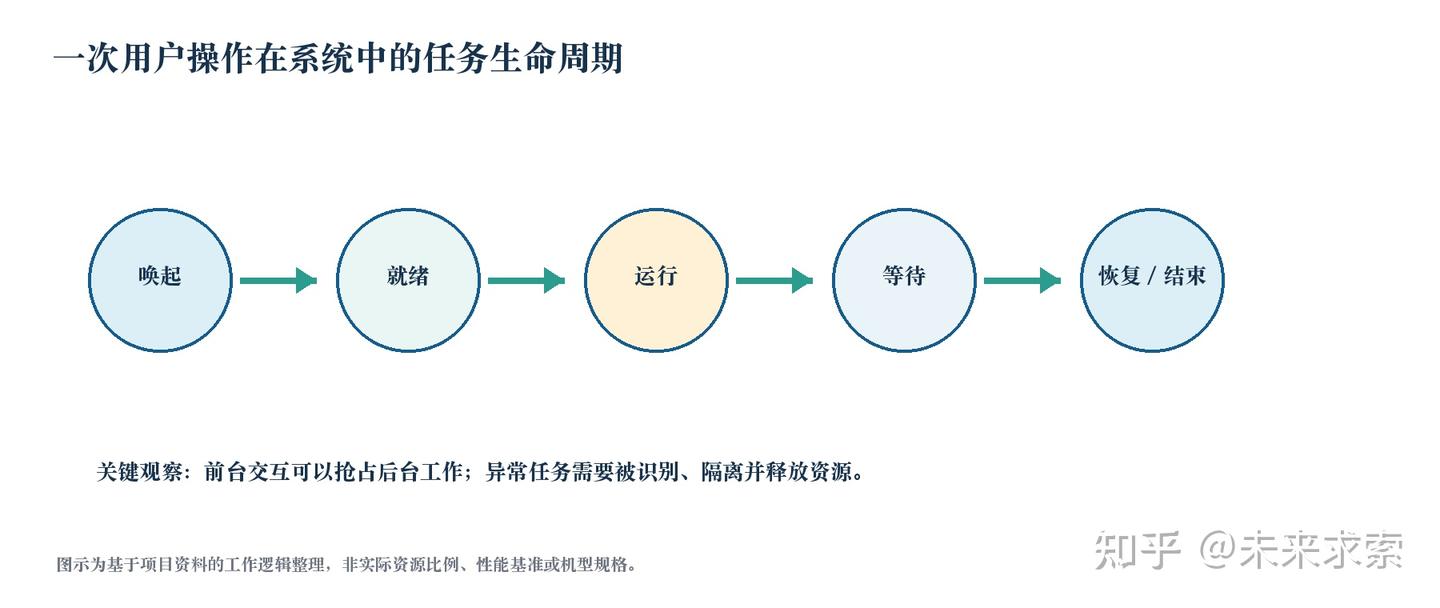
Figure 1 | System Linkage Related to Process Management
- Understanding Process Management from the Moment a Device “Freezes”
When a device slows down, users usually do not ask about process tables, locks, or schedulers. What they feel is a directional key that does not respond, a call that is answered a moment too late, a video that suddenly stops, or an AI query that takes too long to return. A smartphone with abundant resources can absorb some of these problems with larger hardware headroom. A feature phone is different: the same CPU and memory must handle the interface, network, audio, apps, and background services at once. Which task runs first, which yields first, and which should be cleared will directly affect whether the product feels smooth. Process management is this operating order: it does not create computing power, but it decides who uses it and for how long. - PMAOS Has to Manage More Than One Application
PMAOS is positioned as an AI-native operating system and application platform. Its official materials list multithreaded management, CPU time-sharing, deadlock prevention, task priority, and real-time runtime as major directions. From a product perspective, one user action may be broken into several schedulable jobs: screen refresh, key input, network requests, audio playback, account verification, cache reads and writes, and AI service calls, each with its own rhythm. A single-task model can make one function run with focus, but it often lacks flexibility once functions are layered together. In a real multi-application scenario, the test is whether foreground tasks can avoid being blocked by the background, and whether an abnormal task can be prevented from dragging down the whole device.
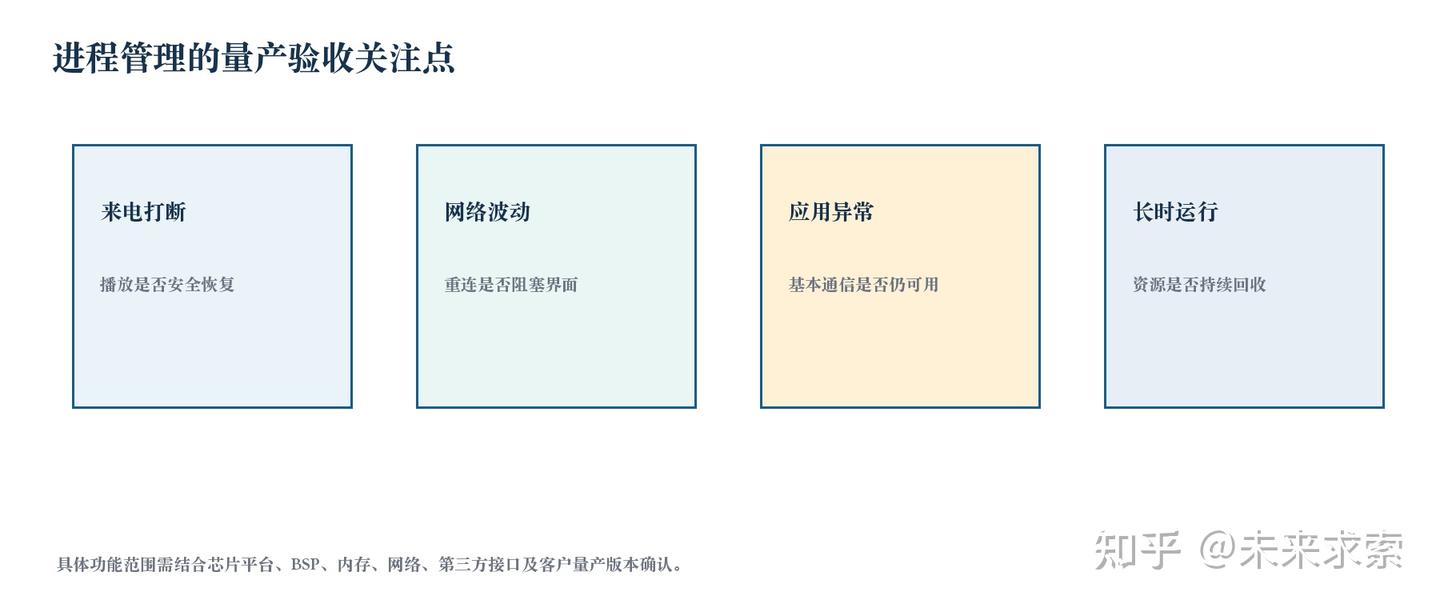
Figure 2 | System Strategy in Process Management Scenarios
- Priority Is Not About Who Is More Important, but Who Is More Urgent
In the keypad feature-phone scenarios served by Xinlingtong, the tasks users notice most are often simple: incoming calls, key presses, voice capture, screen focus, and the audio currently playing. These actions need fast handling. Content preloading, log uploads, app updates, and non-urgent synchronization are better placed in idle periods. PMAOS materials emphasize CPU time slices and real-time runtime because they allow the system to put tasks that cannot wait in front, while preventing one service from occupying the processor for too long. This does not mean every task can be completed in real time; it means the user should be able to see, hear, and operate first. - Always-On AI Does Not Mean Unlimited Background Expansion
The official Q&A notes that PMAOS can shorten handshake time through AI kept resident in memory, and under verified network and service configurations, keep average response speed within 800 milliseconds. The condition matters: network, model service, and device version must all match. “Resident” here is closer to retaining the necessary session and entry point, reducing the waiting time of starting from scratch each time. It does not mean placing a complete large model into a low-spec device. The system still needs to define boundaries for the AI process: raise priority when the user initiates interaction, and release or reduce usage when there is no background work to do. Otherwise, an effort to answer faster may end up slowing the entire device.
| Observation Dimension | System-Level Problem to Solve | Xinlingtong Product-Side Focus |
|---|---|---|
| Task Lifecycle | Creation, wake-up, waiting, recovery, and termination must be controllable | Verify call interruption, app exceptions, and long-duration operation |
| Scheduling Discipline | Foreground tasks must not be blocked by background work for long periods | Give key input, calls, and focus feedback higher priority |
| Fault Boundary | Abnormal services should be localized as much as possible | Ensure core capabilities such as calls and the home screen can recover |
Table 1 | Mapping System Capabilities to Product Delivery
- From Process Management to Mass Production: A Verifiable Checklist Is Needed
For ODMs, OEMs, and brand teams, process management cannot remain a concept. The official site recommends that customers provide the chipset model, BSP version, RAM and Flash, screen and key configuration, audio, network, storage layout, and target application list during evaluation. The reason is clear: the same scheduling strategy may produce different results on different platforms. If Xinlingtong is to place communication, short video, AI, and application expansion into a mass-produced feature phone, it must verify high-frequency paths on real devices: whether playback can recover after an incoming call interrupts it, whether weak-network reconnection blocks the interface, whether an app crash affects communication, and whether users can still complete basic operations during upgrades. These details are where process management truly enters the product field.
Do Not Let the “Background” Become a Foreground Problem for Users
The value of process management often appears where users cannot see it. When the morning alarm rings, the device should not be slowed by overnight background synchronization. When a call comes in, the content being played should give way safely. When the network recovers, the system should resume interrupted work by priority, rather than letting every task rush back to the foreground at once. For resource-constrained terminals, more background activity is not always better. What matters is whether it can be constrained, paused, and restored. PMAOS includes task priority, time slices, and deadlock prevention in its system capability list precisely to turn this order into deliverable underlying rules.
From One Device to a Product Category, Stability Comes from Rhythm
Xinlingtong is not dealing with a single laboratory demo, but with product projects across different chipsets, keypad layouts, network conditions, and user habits. When process management is solid, the product team can define more clearly which actions must respond immediately, which work can wait for idle time, and which tasks should exit once abnormal. These boundaries affect every combination of communication, content, and AI services. Users will not judge whether a time slice is elegant. They remember whether calls connect, whether the interface follows their input, and whether the device becomes slower over time. Protecting these everyday experiences is the practical expression of system competitiveness.
Write “Recoverability” into the Product Definition
A real challenge in process management is how tasks return after being interrupted. Feature-phone users often switch among calls, messages, content, and tools, and many of these actions happen under unstable network conditions. The system should not simply restart every interrupted app, nor should it allow those apps to keep consuming resources quietly. A more reasonable approach is to define save points for different tasks: playback progress can be remembered, input state can be retained, temporary network requests can be retried, and expired background services should be ended promptly. When users return to the original page, they should see a continuous experience rather than a blank screen waiting to reload.
Development Teams Need a Shared Language
In mass-production projects, process management should also become a shared language among R&D, testing, and product teams. Product staff need to state which actions cannot wait; software teams need to explain which tasks can be preempted; testing teams need to find boundaries through long-running use, frequent switching, incoming-call interruption, and weak-network recovery. The devices Xinlingtong faces are not all the same. The earlier these scenarios are written into acceptance cases, the more controllable later adaptation costs become. A mature system is not one that never fails, but one that still has a clear and predictable recovery path when failures occur.
Lightweight Devices Also Deserve Serious Design
Feature phones were once often viewed as terminals for single tasks. But when they also become an entry point for communication, content, and intelligent services, the system needs a finer task order. The work of PMAOS and Xinlingtong shows that innovation on low-spec devices is not only about adding more functions. More importantly, functions must be able to coexist properly. Prioritizing incoming calls, keeping the interface operable when the background is busy, and allowing users to return without starting over are ordinary-looking experiences, but they are also the foundation of a trustworthy system.
Conclusion
Process management is not only for system engineers. It changes product trade-offs: instead of putting every service into the device at once, it is better to first build reliable closed loops for high-frequency tasks; instead of using one demo to prove that there are many functions, it is better to prove stability through frequent switching, long-term use, and occasional failures. If PMAOS can embed this task order into adaptation across different platforms, Xinlingtong can support more real needs with fewer resources. For users who still rely on feature phones for daily communication, stability is not conservatism. It is the most valuable upgrade.
The next key step is not to make the task table more complex, but to handle every interruption, recovery, and exit more naturally. Users will not see how many switches the system performs in the background, but they will feel its presence in every smooth call pickup, return, and continuation.
In this sense, process management is both a technical upgrade and a product commitment: no matter how many things the device is processing, it should not overlook the most important task in front of the user. Only by assigning limited resources according to priority can communication, content, and intelligent services stop competing with one another and become part of the same everyday experience.